
Paris: (+33) 627924398
New Delhi: (+91) 98112 37050
info@lefrehindi.com

We Are Giving Our Children Roots — But Forgetting to Give Them Wings

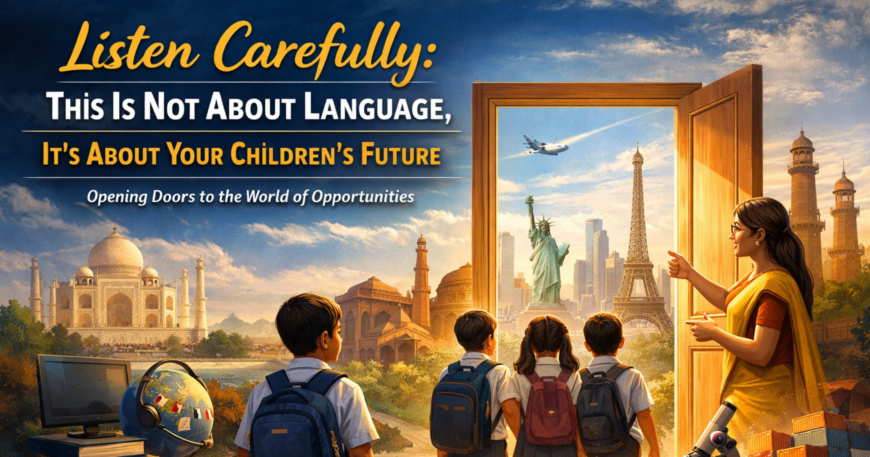
Language Education in India and the Future of Global Opportunities India’s language education choices will define the next generation’s global opportunities — from employability to student mobility and international careers. A conversation educators and policymakers can no longer afford to postpone. Let’s pause for a moment and talk honestly. Not as policymakers. Not as administrators. But as educators — people who understand what is truly at stake when decisions are made in classrooms. Because what is unfolding in India’s education space today — particularly around language education, multilingual learning, and global exposure for students — deserves far deeper attention than it is currently receiving. And I say this not as an alarmist, but as someone who has spent over a decade watching Indian youth step into the world — and watching the doors that are quietly, almost imperceptibly, beginning to narrow. In the 1990s and early 2000s, India was rising. The world was watching. The BPO boom. Software exports. Call centres. Cities like Bangalore, Hyderabad, and Pune became symbols of aspiration. Young people from small towns — first-generation graduates — suddenly had access to global careers. Real jobs. Real mobility. Real dignity. What made this possible? Not infrastructure. Not policy alone. It was language — specifically, the ability to connect with the world. India became globally employable because it became globally understandable. That is the lesson we seem to be forgetting. Let’s be clear: this is not a cultural argument. It is an economic one. And it is one that the numbers are beginning to answer — whether we engage with it or not. That Advantage Is Shifting Look around today. That same industry that once chose India is steadily moving to countries like Vietnam and the Philippines. Not because of infrastructure failures. Not because of cost alone. But because they understood something early that we are only now beginning to reckon with: Language is not a subject. It is a strategy. THE TAIWAN LESSON What One Country Got Right Take Taiwan. They didn’t abandon their language or culture. They didn’t force a shift overnight or create a political storm in classrooms. They did something far more intelligent — and far more patient. They introduced English gradually — through cartoons, media, schooling, and daily exposure. No panic. No politics. Just long-term thinking rooted in a single belief: Their children deserved access to the world. Look at the Netherlands. Look at Finland. These are countries where multilingual education is embedded into the system, where students grow up fluent in multiple languages without losing their identity. Cultural confidence and global readiness coexist. Today, their youth are globally competitive — across technology, trade, research, and international careers. This is not speculation. Even within India, there is a growing recognition — including in policy and industry conversations — that our global service advantage is slowly eroding. And language capability is increasingly cited as a key factor. Write this down: Language is employability. And employability is dignity. Untapped Strength Now here’s the irony. India is already one of the most linguistically gifted nations on the planet. We are not starting from zero. We are sitting on an extraordinary, largely unrecognised advantage. We have 22 constitutionally recognised languages, and hundreds more spoken in daily life. Our students switch between languages effortlessly — something researchers consistently identify as a cognitive advantage. This is not confusion. This is a superpower. And yet, we have roughly 20,000 foreign language teachers for a population of 1.4 billion. That number is not just a gap. It is a signal. A signal of unmet demand — and of massive opportunity in foreign language education, study abroad pathways, and global career readiness. Because behind every language learner is an entire ecosystem waiting to be activated: These are not niche career paths. These are mainstream, high-growth global industries. And every single one of them begins with one simple step:understanding another language. Let me address something directly — because this sits at the heart of our current education policy confusion in India. We have created a false binary. The idea that promoting regional languages and promoting foreign languages are competing priorities. That choosing one means sacrificing the other. This is simply not true. And the evidence is all around us. Dutch children are deeply Dutch — and multilingual. Finnish students are deeply Finnish — and globally employable. Language is not identity versus opportunity. It is identity plus opportunity. And that “plus” is precisely what we are in danger of losing. To every teacher reading this: You chose this profession for a reason. Beyond systems. Beyond pay scales. Beyond circulars. You believed that classrooms matter. And you have seen it firsthand — that moment when a student realises the world is bigger than their surroundings. When a new language unlocks a new confidence. When curiosity turns into possibility. That spark — that expansion of what feels possible — is what is at stake. Not policy documents. Not debates. Students. Their futures. The doors that either opbren or close for them. So I ask, with genuine respect: Are we opening those doors? Or are we, unintentionally, beginning to close them — not with intent, but with inaction? India stands at a defining moment. If we get this right, we create a generation that is rooted in its culture, confident in its identity, and fluent in the language of the world. A generation that doesn’t just participate in global conversations — but leads them. If we get this wrong, we won’t see a dramatic collapse. We will see something far more dangerous. Doors closing quietly. Opportunities shifting gradually. And a generation realising too late what was lost. The countries moving ahead are not doing so loudly. They are doing so patiently. Strategically. Intentionally. अपनी मिट्टी से जुड़ो — लेकिन दुनिया के दरवाज़े मत बंद करो।Stay rooted in your soil — but don’t close the doors to the world. भाषा पहचान भी है, रोज़गार भी है।Language is identity. Language is livelihood. Both can — and must — move
Read More

Stop Turning Language into a Battlefield: Why Making Multiple Languages a Board-Exam Burden Is a Policy Mistake

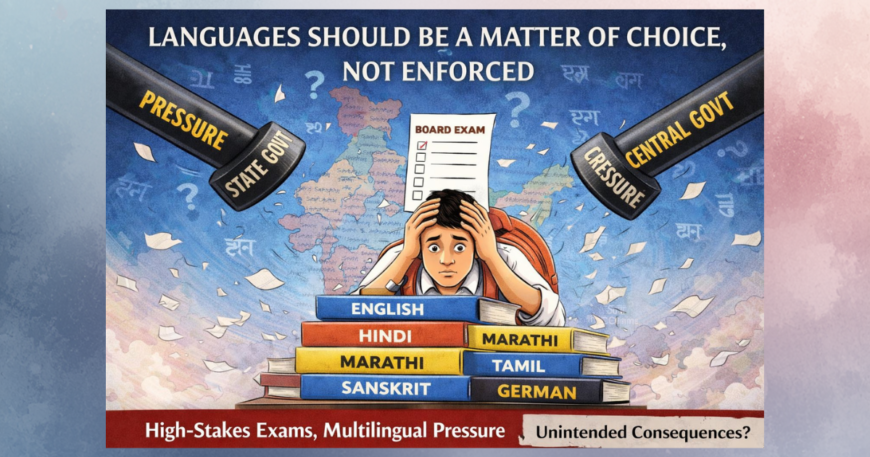
By Haru Mehra — Education Entrepreneur & Global Mobility Specialist In recent weeks, debates around language requirements under India’s evolving National Education Policy (NEP) implementation have intensified across social media, parent forums, and academic circles. Many parents are anxious. Teachers are divided. Students are confused. Beneath the emotional reactions lies a very real concern: Are we unintentionally increasing academic pressure and reducing mobility for Indian families in the name of cultural preservation? Having lived and worked across India and Europe for more than a decade — collaborating with schools in France, Finland, Spain, the Middle East, and Asia — I have observed how different education systems handle language learning. I have also worked closely with Indian families navigating school transitions, relocations, and high-stakes examinations. From that vantage point, one conclusion becomes clear: Promoting multilingualism is valuable.Making multiple languages compulsory at board-exam level is not. Encouragement builds curiosity. Compulsion builds resistance. What Parents Are Actually Saying: A Ground Reality Public reactions to language mandates are not simply ideological disagreements. They reflect practical realities of Indian life: These concerns are not anti-culture sentiments. They are concerns about feasibility, fairness, and student well-being. Culture vs Education: A Policy Confusion One major conceptual mistake in the debate is the assumption that academic language learning automatically creates cultural rootedness. Research suggests otherwise. Cultural identity develops primarily through: A UNESCO report on multilingual education emphasizes that language learning should support cognitive and social development, not become a barrier to educational access (UNESCO, Education in a Multilingual World, 2003). Students can remain culturally connected without academic mastery of multiple scripts. Millions of Indian diaspora families worldwide demonstrate this reality. Board Exams in India: A High-Stakes Environment Class 10 board exams are not ordinary assessments. They influence: Research in educational psychology shows that high-stakes testing environments increase anxiety and reduce intrinsic motivation among adolescents (Putwain & Daly, Educational Psychology Review, 2014). Adding additional compulsory subjects at this stage increases pressure without necessarily improving learning outcomes. Education policy should aim to reduce cognitive overload — not expand it. Mobility: The Most Ignored Policy Variable India is a highly mobile society. Consider a realistic scenario: Each relocation forces the child to learn a new script and language at an advanced academic level. This is not enrichment. It is disruption. The National Education Policy itself acknowledges the importance of flexibility and student-centric learning (NEP 2020, Ministry of Education). Language mandates that ignore mobility contradict this principle. Scripts Are Cognitive Workloads Learning a new language involves two dimensions: Neuroscience research shows that learning a new script activates additional cognitive processing demands compared to learning languages with familiar alphabets (Perfetti & Liu, Psychological Science, 2005). Expecting adolescents to master new scripts within short timeframes — especially under exam pressure — is unrealistic. Economic Reality: English and Global Languages Matter India’s economic growth has been significantly supported by its English-speaking workforce. According to the British Council’s English for Employability report, English proficiency improves access to higher-income employment opportunities in developing economies. Similarly, foreign language skills such as French, German, Japanese, and Spanish open doors in: If India aspires to become a global knowledge hub, language policy must expand functional choices rather than restrict them. International Comparisons Must Be Contextual Countries like Finland or the Netherlands are often cited as multilingual education success stories. However, their systems differ fundamentally: The OECD’s PISA reports consistently highlight that student well-being correlates with learning outcomes (OECD, PISA Well-Being Framework). Policy borrowing without contextual adaptation rarely succeeds. The Principle That Solves the Problem: Choice The core issue is not language learning itself. It is lack of choice. Students should have options to choose: Autonomy improves motivation and learning outcomes (Ryan & Deci, Self-Determination Theory, 2000). Choice is not dilution. Choice is empowerment. A Practical Policy Framework India could adopt a balanced approach: 1. Early Multilingual Exposure Primary school exposure through stories, songs, and cultural activities without exams. 2. Flexible Language Selection Middle school students choose among regional, national, or foreign languages. 3. Simplified Board Exams Only one or two languages contribute to board scores. 4. Mobility Protection Mechanism Bridge courses or exemptions for transferred students. 5. Credit-Based Certifications Languages offered as modular certifications rather than compulsory annual subjects. Such models exist globally and align with NEP’s flexibility goals. National Integration Does Not Come from Exams Forcing students to memorise grammar does not create unity. National integration grows through: Real interaction builds empathy. Exams build anxiety. Political Messaging vs Student Welfare Language policies often carry symbolic value. But education policy must prioritize child welfare over political optics. When parents perceive policies as ideological impositions rather than educational improvements, trust declines. Trust is essential for policy success. Psychological Impact on Students Adolescence is a sensitive developmental phase. Excess academic pressure can lead to: The World Health Organization notes that academic stress is a significant factor affecting adolescent mental health globally (WHO Adolescent Mental Health Report, 2020). Education systems should nurture resilience — not overwhelm students. India’s Diversity Is a Strength — But Policy Must Be Realistic India’s linguistic diversity is extraordinary and worth celebrating. But preservation should happen through: Not compulsory high-stakes exams. A policy designed to celebrate diversity should not unintentionally penalize students academically. A Personal Reflection Having worked with thousands of students traveling across cultures, I have observed something powerful: Students naturally become curious about languages when exposed to meaningful experiences. A student visiting France wants to learn French.A student collaborating with Japan wants to learn Japanese. Motivation grows from relevance — not compulsion. The Way Forward India stands at a crucial moment in its educational journey. We are moving toward: Language policy must align with this future. We need: Not additional board-exam pressure. Final Thought Promoting languages is a noble goal. But turning languages into compulsory exam burdens risks harming the very students we aim to empower. Education policy must ask one simple question: Does this decision help the child thrive? If the answer is uncertain, we must rethink. India’s strength has always been adaptability. Our education system must reflect the same wisdom. References
Read More

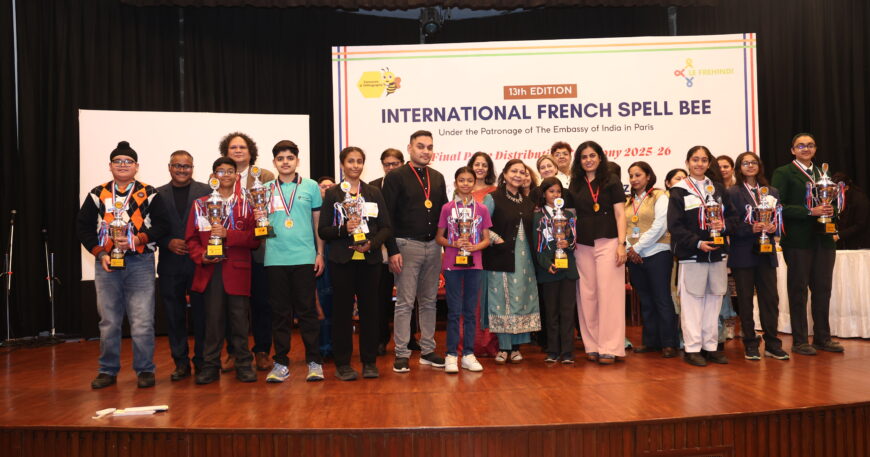
Beyond Words, Beyond Borders: The Grand Success of the 13th International French Spell Bee

The 13th edition of the International French Spell Bee (IFSB), successfully organized by Le Frehindi, was not just a competition—it was a celebration of language, culture, perseverance, and global learning. The event brought together young francophones, dedicated educators, eminent academicians, and cultural icons under one roof, reaffirming the power of language as a bridge between nations. About Le Frehindi: Shaping Global Citizens of the 21st Century Le Frehindi is a Paris-based experiential learning and youth mobility organization that goes far beyond traditional cultural exchange. Rooted in the philosophy of nurturing responsible global citizens, Le Frehindi designs future-focused programs that seamlessly blend education, skill development, and deep cultural immersion. Today, Le Frehindi stands among the leading global youth mobility platforms, offering hands-on learning experiences through: These initiatives empower young learners with practical skills, cultural sensitivity, and a global mindset, preparing them to collaboratively address real-world challenges. The International French Spell Bee is one such flagship initiative—now proudly in its 13th successful year. A Warm Welcome & Seamless Registrations The day began with a well-organized registration process, managed efficiently by the Le Frehindi team and volunteers. From verifying participant details to ensuring smooth check-ins, the experience set the tone for a professionally executed event where students could focus entirely on performing their best. A Powerful Cultural Opening: When Language Comes Alive The event opened on a deeply artistic and reflective note with a stirring cultural performance that reminded everyone that language is not only spelled or spoken—it is felt. We were honoured to present Sansaptak, a Delhi-based theatre and arts collective founded in 1992, known for its socially engaged and experimental performances. With over three decades of impactful work and more than 80 productions across India and internationally, Sansaptak is affiliated with the Ministry of Culture, Government of India, Sangeet Natak Akademi, Sahitya Kala Parishad, and empanelled with ICCR. 🎭 Performance: “Rakshas Vilaap”Based on Japanese folklorePerformers: Danish & Anjon BoseDirector & Design: Ms. Sreemoyee Dasgupta This dramatic readers’ theatre performance left the audience spellbound and set a profound tone for the day. Honouring the Pillars of the Competition Esteemed Judges The competition was elevated by the presence of highly respected academicians: The Pronouncer & Moderator A thunderous applause was reserved for Madame Jaya Gadgil, Ex-HOD of the French Department at Fergusson College, Professor at Alliance Française de Pune, and Vice President of the Indian Association of Teachers in French. A pillar of the International French Spell Bee for over a decade, her impeccable pronunciation, deep linguistic insight, and unwavering dedication—even amidst personal challenges—made her role as Pronouncer and Moderator truly invaluable. Competition Rounds: A Test of Skill, Nerves & Passion The competition unfolded across multiple stages: Every round reflected the students’ dedication, preparation, and love for the French language. Winners of the 13th International French Spell Bee 🟦 Débutant (Grades 4–6) 🟨 Intermédiaire (Grades 7–8) 🟥 Avancé (Grades 9–12) 🏅 Winners were felicitated with gold medals, certificates, French gifts, and keyrings, along with their proud teachers. Victory & Grand Rewards 🥇 1st Prize: All-expenses-paid Scholastic Exchange Tour to France🥈 2nd Prize: Fully-Funded Global Citizen Camp, Auroville🥉 3rd Prize: Fully-Covered Adventure Camp, Frehindi Village, Uttarakhand Introducing the IFSB Teacher Ambassador Program A special highlight of this year was the launch of the Le Frehindi Ambassador Teacher Program. 🎓 Awarded to: Both educators brought 100+ registrations each, showcasing extraordinary dedication to French language promotion. IFSB Teacher Ambassador Network (Continuing in 14th IFSB) 🔗 Register Now to be the next Teacher Ambassador: https://tinyurl.com/Teacher-ambassador Our Guest of Honours The event was further enriched by distinguished guests: A Flawless Grand Finale: Teamwork at Its Best The Le Frehindi team and volunteers ensured: The event concluded with a warm high tea, bringing together judges, guests of honour, pronouncer, performers, the Le Frehindi team, and volunteers. Looking Ahead: Join the 14th International French Spell Bee ✨ Let your students spell their way to the world. Register Now by clicking on these links: 📚 Levels: 📞 Contact Us:Phone: +91-9811237080 / 50Email: frenchspellbee@lefrehindi.comWebsite: www.frenchspellbee.fr Merci Beaucoup & À Bientôt! As we draw the curtains on the 13th International French Spell Bee, we extend our heartfelt gratitude to every participant, teacher, judge, guest, volunteer, and supporter who made this journey unforgettable. Your passion keeps the French language alive and thriving. Au revoir et à bientôt — see you at the 14th IFSB! 🇫🇷✨
Read More

🌍 From the Alps to the Himalayas: Building Bridges of Culture, Youth, and Sustainability

In today’s interconnected world, where borders are shrinking but cultural identities remain vital, Le Frehindi is committed to creating living bridges that connect communities across continents. One such visionary effort is the Alps ↔ Himalayas Initiative (ALHI) — a flagship project we aim to develop over the next three to five years. This unique program will link two of the world’s most iconic mountain ranges, the Alps in Europe and the Himalayas in South Asia, through cultural exchange, youth empowerment, and sustainable development. 🌱 Why the Alps ↔ Himalayas Initiative (ALHI) Matters The Alps and the Himalayas are not just breathtaking landscapes. They are living ecosystems, cultural heartlands, and home to millions of young people whose futures rely on sustainability and international cooperation. Through ALHI, we will connect these two regions by fostering: By uniting shared challenges and opportunities, ALHI will serve as a bridge between Europe and South Asia for culture, education, and green growth. 🚀 A Game-Changer for Local Youth At its core, ALHI is about empowering young people. Beyond cultural exchange, the project is designed to create tangible social and economic benefits for local communities: This is how ALHI goes beyond tourism — it is about creating future-ready youth leaders who think globally but act locally. 🤝 Partnerships & Collaboration The Alps ↔ Himalayas Initiative will grow with strong partnerships at every level. With the patronage of the Embassy of India in France, the project has diplomatic credibility and international recognition. However, the true impact lies in grassroots collaboration. We are actively seeking partnerships with: By working together, we can create sustainable models of cultural and educational collaboration that will benefit generations to come. 🛤️ The Road Ahead ALHI is not a short-term initiative but a long-term vision. Over the next three to five years, it will evolve into one of Le Frehindi’s most defining flagship projects — a program that links mountains, cultures, and futures. 📩 How to Get Involved:If you are based in the Alps or the Himalayas and would like to collaborate, we invite you to join this movement. Please reach out to us at ceo@lefrehindi.com. Being based in Lyon, France, our team is happy to meet collaborators at a mutually convenient time. ✨ From the Alps to the Himalayas: A Bridge for the Future The Alps ↔ Himalayas Initiative is more than a project. It is a movement where mountains connect people, cultures, and opportunities. By working together, we can create a sustainable future for both regions and inspire the world with a model of cultural exchange and youth-led development. Join us in building this bridge of culture, youth, and sustainability. — Team Frehindi
Read More

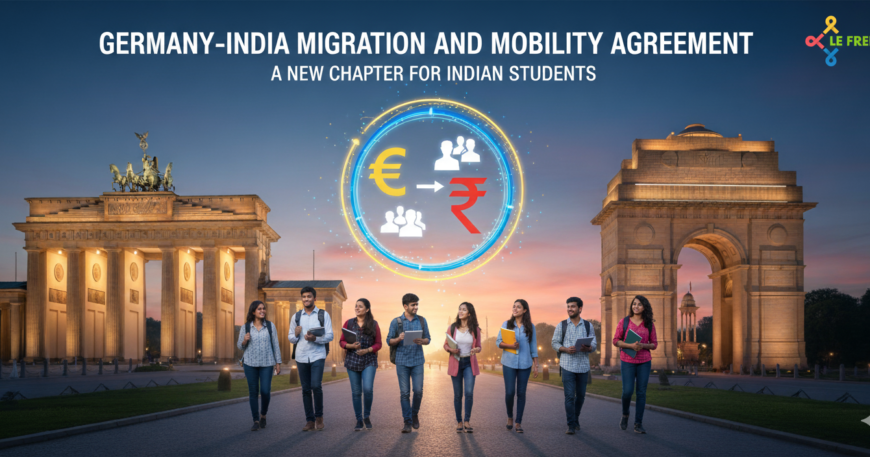
Germany–India Migration and Mobility Agreement: A New Chapter for Indian Students

In December 2022, India and Germany signed the Comprehensive Migration and Mobility Partnership Agreement (MMPA)—a landmark step aimed at creating smoother pathways for Indian students, researchers, skilled professionals, and trainees to study, work, and live in Germany. The agreement officially came into effect in March 2023 and introduced several key measures: Beyond these formal provisions, the MMPA also encourages the structured movement of apprentices, volunteers, interns, language learners, and young professionals. It further strengthens ethical recruitment and vocational training in high-demand sectors such as healthcare, hospitality, and engineering. How Frehindi Is Responding At Le Frehindi, we see this agreement not merely as a policy milestone but as an opening for real, tangible opportunities for Indian youth. While our expertise has long been in connecting India and France through language learning and cultural exchange programs, the MMPA now enables us to expand our scope across Europe—especially into Germany. Here’s how we’re positioning ourselves: German Language Training at Indian Universities Through our International Lounges, we will help students achieve B1 proficiency in German right on their university campuses in India. This model—already highly successful with French—will now prepare students for both academic study in Germany and vocational pathways. Hybrid Language Packages For students seeking European career opportunities, Frehindi is curating hybrid programs that combine French as a cultural bridge with German as a functional access tool. This dual-language strategy prepares students for mobility across multiple European countries. Visa-Ready Preparation By collaborating with institutions like the Academic Evaluation Centre, we aim to serve as a language bridge and mentor for visa-ready candidates. Our focus will be on practical German, aligned with the professional fields Germany is actively recruiting in—such as STEM, healthcare, and skilled trades. Future Projects in Mobility Frehindi is also exploring partnerships for apprenticeships, internships, and volunteering exchanges in Germany, complementing our strong Indo-French exchange ecosystem and extending opportunities across Europe. Why This Matters Germany is rapidly becoming one of the top destinations for Indian students. With world-class universities, career-focused vocational training, and a welcoming immigration framework, the country offers unmatched opportunities. However, while the MMPA reduces bureaucratic hurdles, it also raises the bar on language skills and cultural adaptability. At Le Frehindi, our expertise in building bridges between European and Indian youth now extends to Germany—helping students not just to arrive, but to study in Germany, find jobs, and truly thrive. 📩 Want to know more?For details on upcoming programs, or to explore how your university can host an International Lounge, write to us at team@lefrehindi.com.
Read More

Exploring Oulu: Building Indo-Finnish Bridges in Education and Culture

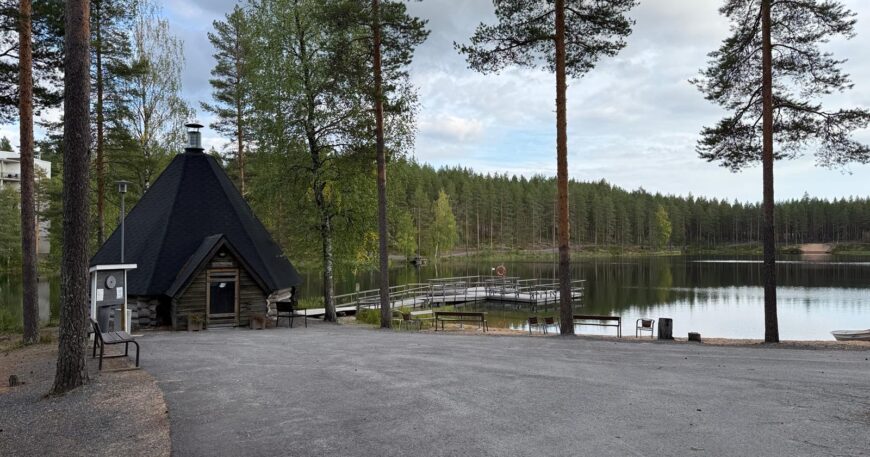
The City of Oulu—known as the “northern capital of Finland”—recently extended a special invitation to Mr. Harbinder “Haru” Mehra, CEO of Le Frehindi, Paris. The visit aimed to give him first-hand insights into the region’s educational and cultural strengths, while exploring future collaborations between Finland and India. Over three days, Mr. Mehra experienced a blend of school and university visits, nature-based activities, and cultural exchanges. What unfolded was more than a study tour—it was the foundation of meaningful partnerships that could connect students, teachers, and institutions across continents. Day 1: Arrival and Rokua UNESCO Global Geopark On arrival at Oulu Airport, Mr. Mehra was warmly welcomed by Ms. Johanna Salmela from the City of Oulu, who hosted him throughout the visit. The first stop was Rokua UNESCO Global Geopark, a region of stunning natural beauty and environmental importance. Discussions here centered on linking Rokua with protected regions in India, particularly in the Himalayas. Mr. Mehra highlighted how such partnerships could enrich cross-cultural learning, especially for young people exposed to global sustainability practices. The day also included visits to Rokua Health & Spa and the Wilderness Hotel Rokuanhovi, run by an ex-Olympic ski champion. The lakeside setting and the inspiring story of its owner left a lasting impression, showing the potential of such locations for hosting student and teacher groups. After a light dinner at Nature Dream Days, the evening concluded with check-in at GreenStar Hotel in Oulu—a sustainable property that seamlessly integrates environmental responsibility into Finnish hospitality. Day 2: Resorts, Nature Walks, and Bird Sanctuaries The second day began at Taiga Resort, a riverside family home converted into a boutique-style retreat. Its warm hospitality struck Mr. Mehra as ideal for Indian students traveling abroad for the first time, offering both safety and comfort. From there, the group moved to Loppula for a guided nature walk with Ms. Rita, who introduced Finland’s unique “Everyman’s Right”—the freedom to roam and enjoy nature regardless of land ownership. Around a campfire, sausages were grilled in the traditional Finnish way, a simple yet profound cultural experience. In the afternoon, attention turned to Liminka Bay, one of Northern Europe’s most celebrated birdwatching destinations. Its vast wetlands and migratory birdlife offered an immersive ecological lesson. Here, Mr. Mehra met the principal of a Liminka school who, despite it being a Saturday, joined the meeting and expressed strong interest in welcoming Indian students. The day ended at Nallikari by the Sea, where Mr. Mehra tried kayaking for the very first time. The calm waters made the experience both safe and enjoyable, reinforcing its suitability for Indian student groups. That evening, over an Indian dinner with Mr. Mikko Kiuttu from Rokua Geopark, discussions on long-term Indo-Finnish partnerships deepened, highlighting the shared benefits of cultural and educational exchanges. Day 3: Education at the Core The final morning focused on education, with meetings at Radisson Blu Hotel, Oulu, involving representatives from: These conversations opened new avenues for collaboration—ranging from teacher training and vocational exchanges to research-based partnerships. Each meeting reinforced the openness of Finnish institutions to host Indian students and teachers. Key Takeaways UNESCO Geopark Partnerships – Strong potential to link Rokua Geopark with Indian geoparks and Himalayan conservation zones for joint projects and student exchanges. Student-Centric Hospitality – Resorts like Taiga and Rokuanhovi offer safe, nurturing environments, crucial for first-time international travelers. Immersive Outdoor Education – Activities such as kayaking, birdwatching, and nature walks provide hands-on ecological learning, perfectly suited for experiential education. Institutional Willingness – Schools, universities, and vocational colleges in Oulu showed clear intent to host Indian students and teachers. Shared Cultural Touchpoints – The blend of Indian and Finnish hospitality, reinforced through meals and conversations with educators and municipal leaders, created genuine human connections. A Step Toward Indo-Finnish Educational Bridges The educational visit to Oulu was not just an inspection tour—it was an exercise in building bridges. As Mr. Mehra reflected: “The warmth of the people, the openness of the institutions, and the immersive natural experiences make Oulu a perfect destination for Indo-European collaboration in education.” With its foundations in sustainability, trust, and high-quality education, Oulu is poised to become a strategic partner in Le Frehindi’s mission of creating meaningful global exposure for youth. The discussions during these three days will now be translated into concrete programs—teacher training, student exchanges, and joint cultural projects—that promise to strengthen ties between Finland and India. As Mr. Mehra departed for Paris, it was clear that Oulu had not only sown the seeds but also nurtured the soil for a flourishing Indo-Finnish partnership.
Read More

EU Delegation Experiences Incredible India with Le Frehindi

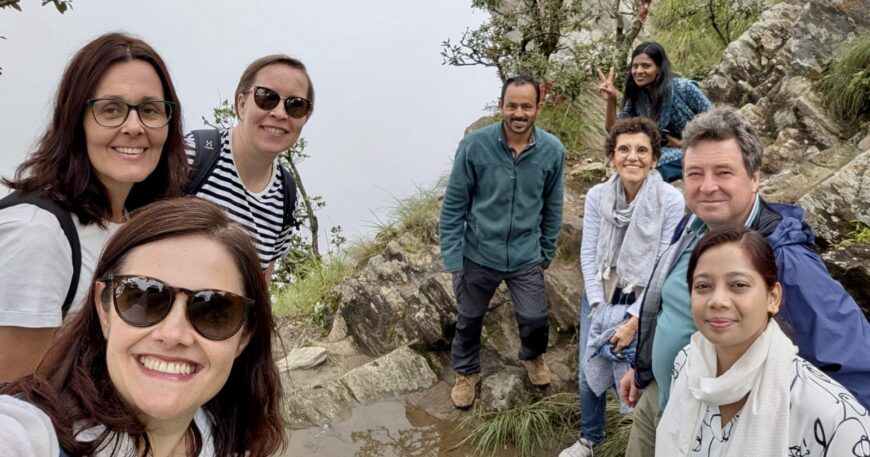
This July, Le Frehindi had the honor of hosting a distinguished EU delegation to India — a journey that beautifully combined academic exchange, cultural immersion, and Himalayan exploration. What unfolded was not just a visit, but an unforgettable experience that showcased the true essence of Incredible India. Academic Exchange: Strengthening Indo-European Collaborations The delegation’s journey began with visits to some of India’s leading universities and schools, where they interacted with students, exchanged academic insights with faculty, and signed new MoUs to strengthen Indo-European collaborations. At each institution, the delegation was welcomed in the traditional Indian way — with tilak, garlands, and warm smiles. Many even stayed with Indian host teachers, experiencing the rhythm of daily life, heartfelt conversations, and the joy of authentic Indian food. These cultural exchanges deepened their understanding of Indian education and community life. Himalayan Exploration: Beyond the Classrooms The next leg of the journey took them to the Himalayan region, where they visited village schools and grassroots NGOs dedicated to reviving Indian art, culture, and traditions. Here, the delegation engaged with children whose resilience, curiosity, and creativity left a lasting impression. They also discovered the strength of community bonds in rural India, which continue to nurture cultural heritage and values. Travel Stories: Finding Harmony in Chaos India revealed its uniqueness not only through its people and institutions but also through the delegation’s travel experiences. From navigating the bustling roads of Delhi — where endless honking seemed like chaos — to enjoying the scenic ride aboard the Shatabdi Express to Kathgodam, every moment was filled with surprises. During their train journey, the delegation came across a newspaper article titled “The Freedom to Honk?” by Santosh Desai. It explained how honking in India is more than just noise — it is a language of urgency, survival, visibility, and negotiation. What first felt chaotic soon revealed itself as an unwritten system of order. With smiles, they summed it up in two words: “Incredible India!” Le Frehindi’s Young and Dynamic Team Behind this successful cultural exchange stood Le Frehindi’s dedicated team in India — Ms. Tanuja, Ms. Shilpa, Ms. Babita, Ms. Vaishali, and Ms. Anushka. Their meticulous planning, guidance, and hospitality ensured that every detail was taken care of and every moment became a memory for the delegation. More Than a Visit: Experiencing India’s Soul This delegation’s journey was more than just an academic trip; it was a chance to experience India’s soul — vibrant, unpredictable, diverse, and deeply welcoming. As the EU delegation returned home, they carried with them not only new collaborations but also stories, friendships, and cultural experiences that will stay with them forever. India, with all its contrasts and colors, proved once again why the world calls it: Incredible India. ✨ Be Part of the Next Journey! At Le Frehindi, we believe in building bridges between India and the world through academic collaborations, cultural exchanges, and experiential learning opportunities. If you are a school, university, or institution interested in hosting or participating in such life-changing exchange programs, we would love to hear from you. 📩 Contact Us Today🌐 Website: www.lefrehindi.com📧 Email: team@lefrehindi.com📞 Call/WhatsApp: +91-9811237050 👉 Let’s create opportunities together — for students, teachers, and communities to connect across borders.
Read More

Preparing Today’s Youth for a Future Beyond Screens

In today’s world, knowledge is literally at our fingertips. With a single click, students can access information that earlier generations could only dream of. Add to this the rise of Artificial Intelligence, which is rapidly taking over repetitive and entry-level work, and the reality is clear: the jobs of the future will demand much more than just knowledge. Creativity, problem-solving, adaptability, and emotional intelligence will become the true differentiators. Yet, the challenge we face is that our youth — while more informed than ever before — are often not developing these crucial life skills. Screen addiction is leading to reduced concentration spans, unhealthy lifestyles, and even rising aggression. Many young people today struggle with empathy, tolerance, and emotional stability. The simple but powerful skills of listening, collaborating, and resolving conflicts are being eroded at a time when they are most needed. At Le Frehindi, under the leadership of our CEO Mr. Haru Mehra, we believe the answer lies in creating new formats of learning that go beyond classrooms and screens. Our philosophy is simple: to prepare the youth not just with academic knowledge, but with the right attitude, confidence, and human connection to thrive in a complex global world. This is why we are building experiential programs that combine learning with living. Whether it is mindfulness and human-skill bootcamps, well-being and spirituality workshops, roots immersion camps, or off-screen skill-based programs like cinematography, gastronomy, or sports — our goal is to cultivate empathy, creativity, and teamwork. Alongside, our job shadowing and hybrid internships will give students the workplace exposure that AI cannot replace, while our cultural exchange programs will deepen their understanding of diversity and collaboration. We believe these initiatives are not just programs — they are investments in the future of humanity. If today’s youth can reconnect with themselves, with each other, and with the real world beyond their screens, they will not only find meaningful careers but also lead happier and more balanced lives. At Le Frehindi, this is the journey we are committed to — shaping global citizens who are future-ready, emotionally strong, and deeply human. To reach us out on our programs feel free to write to us at team@lefrehindi.com Priya Natrajan International Coordinator – Le Frehindi
Read More

✨ A Parisian Dream for Teachers: Full Itinerary & Cost Breakdown of the Educators’ Enrichment Program

Because it’s time you took the trip! Every year, teachers inspire students to dream big, explore the world, and embrace global learning. But what if, this time, it’s you walking the streets of Paris, exploring museums, sipping coffee by the Seine, and networking with educators from across the globe? Welcome to the Educators’ Enrichment Program in Paris – a one-of-a-kind immersive experience for teachers of all subjects and grade levels, curated by Le Frehindi under the patronage of the Indian Embassy in Paris. And yes – early birds save big! 🐦✨ An International Journey for Teachers Across Subjects Whether you’re teaching English in Delhi, Math in Mumbai, or History in Hyderabad — it’s time to step into a global classroom yourself! This October 2025, join fellow educators from across India for an unforgettable international professional development and cultural immersion experience in Paris. 🌍 Why This Program? Teachers shape the minds of tomorrow. But who’s shaping their growth today? Our Educators’ Enrichment Program is curated to help you:✅ Gain international exposure✅ Participate in meaningful cross-cultural exchange✅ Interact with French educators & students✅ Explore world-renowned institutions and heritage sites✅ Reignite your passion for teaching And all of this while soaking in the magic of Paris — the city of light, love, and learning. 🗓 Detailed Itinerary: What Awaits You in Paris? Day 1: Arrival in Paris & Warm Welcome Day 2: Academic Immersion & School Visits Day 3: Paris City Tour & Cultural Appreciation Day 4: Museum & Art Appreciation Day 5: Educator Roundtable & Indian Cultural Showcase Day 6: Free Exploration & Shopping Day 7: Departure from Paris 💸 Program Cost & Limited-Time Offer Program Fee: ₹1,75,000 (All-inclusive: travel, stay, meals, local transport, activities) Early Bird Discount:Register by 10th August 2025 and get ₹15,000 OFF!That means your all-inclusive experience comes at just ₹1,60,000! Limited spots available. Reserve now to avoid missing out. 🧑‍🏫 Who Can Join? All subject teachers are welcome — whether you teach languages, science, maths, arts, or sports. No prior international experience required. This is your chance to explore, grow, and collaborate on a global platform. ✈️ What Makes This Program Unique? 📥 Ready to Embark on This Global Learning Journey? 👉 Fill the form to register now:Click here to Register 📩 Contact: team@lefrehindi.com📞 Call/WhatsApp: +91 9811237050 | +91 9557050195‬ Let the world be your classroom. See you in Paris! 🇫🇷✨
Read More
Cart

Summer Programs 2026 (May–June) Now Open! 🚀 | Winter Programs 2026 (Oct–Dec) Filling Fast ❄️ Secure Your Spot Now

X