
Paris: (+33) 627924398
New Delhi: (+91) 98112 37050
info@lefrehindi.com

Stop Turning Language into a Battlefield: Why Making Multiple Languages a Board-Exam Burden Is a Policy Mistake

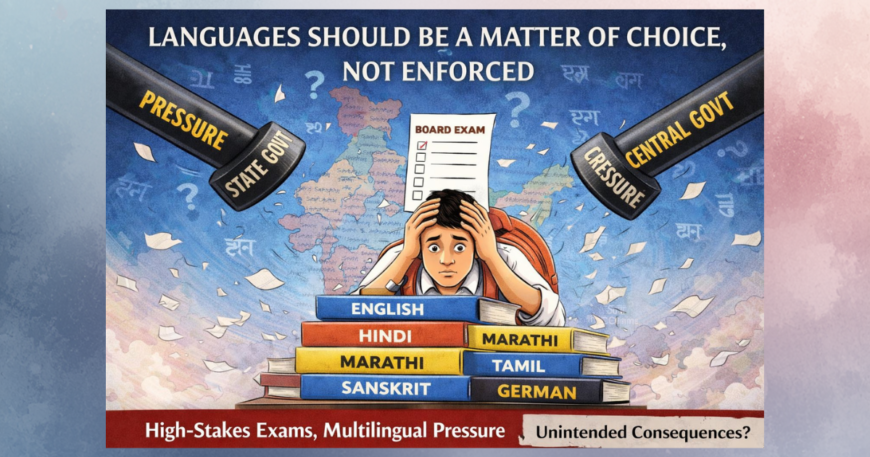
By Haru Mehra — Education Entrepreneur & Global Mobility Specialist In recent weeks, debates around language requirements under India’s evolving National Education Policy (NEP) implementation have intensified across social media, parent forums, and academic circles. Many parents are anxious. Teachers are divided. Students are confused. Beneath the emotional reactions lies a very real concern: Are we unintentionally increasing academic pressure and reducing mobility for Indian families in the name of cultural preservation? Having lived and worked across India and Europe for more than a decade — collaborating with schools in France, Finland, Spain, the Middle East, and Asia — I have observed how different education systems handle language learning. I have also worked closely with Indian families navigating school transitions, relocations, and high-stakes examinations. From that vantage point, one conclusion becomes clear: Promoting multilingualism is valuable.Making multiple languages compulsory at board-exam level is not. Encouragement builds curiosity. Compulsion builds resistance. What Parents Are Actually Saying: A Ground Reality Public reactions to language mandates are not simply ideological disagreements. They reflect practical realities of Indian life: These concerns are not anti-culture sentiments. They are concerns about feasibility, fairness, and student well-being. Culture vs Education: A Policy Confusion One major conceptual mistake in the debate is the assumption that academic language learning automatically creates cultural rootedness. Research suggests otherwise. Cultural identity develops primarily through: A UNESCO report on multilingual education emphasizes that language learning should support cognitive and social development, not become a barrier to educational access (UNESCO, Education in a Multilingual World, 2003). Students can remain culturally connected without academic mastery of multiple scripts. Millions of Indian diaspora families worldwide demonstrate this reality. Board Exams in India: A High-Stakes Environment Class 10 board exams are not ordinary assessments. They influence: Research in educational psychology shows that high-stakes testing environments increase anxiety and reduce intrinsic motivation among adolescents (Putwain & Daly, Educational Psychology Review, 2014). Adding additional compulsory subjects at this stage increases pressure without necessarily improving learning outcomes. Education policy should aim to reduce cognitive overload — not expand it. Mobility: The Most Ignored Policy Variable India is a highly mobile society. Consider a realistic scenario: Each relocation forces the child to learn a new script and language at an advanced academic level. This is not enrichment. It is disruption. The National Education Policy itself acknowledges the importance of flexibility and student-centric learning (NEP 2020, Ministry of Education). Language mandates that ignore mobility contradict this principle. Scripts Are Cognitive Workloads Learning a new language involves two dimensions: Neuroscience research shows that learning a new script activates additional cognitive processing demands compared to learning languages with familiar alphabets (Perfetti & Liu, Psychological Science, 2005). Expecting adolescents to master new scripts within short timeframes — especially under exam pressure — is unrealistic. Economic Reality: English and Global Languages Matter India’s economic growth has been significantly supported by its English-speaking workforce. According to the British Council’s English for Employability report, English proficiency improves access to higher-income employment opportunities in developing economies. Similarly, foreign language skills such as French, German, Japanese, and Spanish open doors in: If India aspires to become a global knowledge hub, language policy must expand functional choices rather than restrict them. International Comparisons Must Be Contextual Countries like Finland or the Netherlands are often cited as multilingual education success stories. However, their systems differ fundamentally: The OECD’s PISA reports consistently highlight that student well-being correlates with learning outcomes (OECD, PISA Well-Being Framework). Policy borrowing without contextual adaptation rarely succeeds. The Principle That Solves the Problem: Choice The core issue is not language learning itself. It is lack of choice. Students should have options to choose: Autonomy improves motivation and learning outcomes (Ryan & Deci, Self-Determination Theory, 2000). Choice is not dilution. Choice is empowerment. A Practical Policy Framework India could adopt a balanced approach: 1. Early Multilingual Exposure Primary school exposure through stories, songs, and cultural activities without exams. 2. Flexible Language Selection Middle school students choose among regional, national, or foreign languages. 3. Simplified Board Exams Only one or two languages contribute to board scores. 4. Mobility Protection Mechanism Bridge courses or exemptions for transferred students. 5. Credit-Based Certifications Languages offered as modular certifications rather than compulsory annual subjects. Such models exist globally and align with NEP’s flexibility goals. National Integration Does Not Come from Exams Forcing students to memorise grammar does not create unity. National integration grows through: Real interaction builds empathy. Exams build anxiety. Political Messaging vs Student Welfare Language policies often carry symbolic value. But education policy must prioritize child welfare over political optics. When parents perceive policies as ideological impositions rather than educational improvements, trust declines. Trust is essential for policy success. Psychological Impact on Students Adolescence is a sensitive developmental phase. Excess academic pressure can lead to: The World Health Organization notes that academic stress is a significant factor affecting adolescent mental health globally (WHO Adolescent Mental Health Report, 2020). Education systems should nurture resilience — not overwhelm students. India’s Diversity Is a Strength — But Policy Must Be Realistic India’s linguistic diversity is extraordinary and worth celebrating. But preservation should happen through: Not compulsory high-stakes exams. A policy designed to celebrate diversity should not unintentionally penalize students academically. A Personal Reflection Having worked with thousands of students traveling across cultures, I have observed something powerful: Students naturally become curious about languages when exposed to meaningful experiences. A student visiting France wants to learn French.A student collaborating with Japan wants to learn Japanese. Motivation grows from relevance — not compulsion. The Way Forward India stands at a crucial moment in its educational journey. We are moving toward: Language policy must align with this future. We need: Not additional board-exam pressure. Final Thought Promoting languages is a noble goal. But turning languages into compulsory exam burdens risks harming the very students we aim to empower. Education policy must ask one simple question: Does this decision help the child thrive? If the answer is uncertain, we must rethink. India’s strength has always been adaptability. Our education system must reflect the same wisdom. References
Read More

Le Frehindi Lights Up IATF Congress 2024 in Jaipur: A Tale of Connections, Culture, and Celebrations

What happens when passionate French teachers, a vibrant cultural hub like Jaipur, and a dynamic team like Le Frehindi come together? You get three days of unforgettable memories, inspiring conversations, and exciting discoveries! From November 18 to 20, 2024, the 38th National Congress & 4th International Colloquium, organized by the Indian Association of Teachers of French (IATF), took place in Jaipur. This grand event brought together educators, linguists, and institutions across India, and Le Frehindi proudly made its mark through engaging sessions, creative stalls, and meaningful interactions. Whether you’re a teacher, student, learner, principal, or institute owner, there’s something for everyone in what we offer. Let’s dive into our exciting journey at IATF Congress 2024, filled with cultural immersion, collaborative learning, and heartfelt connections. Day 1: Grand Opening, High Tea, and a Cultural Extravaganza The event began with enthusiastic registrations, a delicious lunch, and an inspiring inauguration ceremony. The tone was set with thought-provoking speeches from experts in French education, laying the foundation for three enriching days ahead. Our Le Frehindi stall quickly became a hub of activity. Delegates from prominent schools, universities, and institutions like Alliance Française stopped by to learn about our wide array of programs, including Cultural Exchange initiatives, Teacher Training Program, and Student Mobility opportunities. Many were curious about our name—Le Frehindi—and were fascinated by its origins. We explained with pride that the name symbolizes a cultural bridge between French (“Le Français-French”) and Indian (“Hindi”) cultures, a vision brought to life by our CEO, Mr. Haru Mehra. The High Tea: A Highlight of Day 1 As proud sponsors, Le Frehindi hosted the High Tea, creating a welcoming space for educators and delegates to connect over a delightful spread of refreshments. Conversations flowed as participants shared insights, discussed collaboration opportunities, and exchanged ideas about the future of French education in India. The atmosphere was one of warmth and camaraderie, making the High Tea a memorable highlight of the event. Evening brought the much-awaited Gala Night at Hotel Clarks Amer, where the charm of Rajasthani culture took center stage. We were mesmerized by folk dances, soulful singing, and a delightful puppet show. And yes, the authentic Rajasthani dinner was the cherry on top—who could resist the flavors of Dal Baati Churma? Day 2: Thought-Provoking Ateliers and Jaipur’s Splendor The second day was an intellectual feast, featuring engaging ateliers (workshops) and sessions led by experts in French education. These ateliers left participants inspired and ready to innovate in their classrooms. Here are some highlights: La BD Québécoise dans une classe de FLE by Anna Giaufret: How graphic novels can make French learning interactive. Comment encourager le dialogue interculturel en classe de FLE? by Annick Hatterer: Encouraging open dialogue for cultural understanding. Gamifier sa classe de FLE by Halyna Kutasevych: The role of gamification in dynamic and engaging teaching. Enseigner avec le podcast Parlez-vous Paris? by Delphine Barreau: Integrating audio resources to enhance learning. Atelier Genially by Komal Shah: Tools to create digital, self-paced learning modules. Ludification avancée avec l’IA by Amanda de Athayde: AI-enhanced gamification techniques for interactive classrooms. Day two was even more electrifying as more educators and delegates stopped by our stall. What set us apart? Our focus on safe, well-structured mobility programs that combine experiential learning with cultural immersion. From Exchange Programs to Teacher Training Programs, everyone was eager to learn what made Le Frehindi unique. We also added a touch of magic by distributing souvenirs and gifts specially brought from Paris by Haru Sir—a sweet token of our gratitude that left visitors smiling. In the evening, we stepped out to explore Jaipur, starting with the stunning Amber Fort. The light and sound show brought history to life, narrating tales of valor and legacy. Later, we wandered through the bustling streets of Hawa Mahal and wrapped up the day with dinner at the charming Tattoo Cafe, enjoying a gorgeous view of the iconic monument. Day 3: Closing Reflections and Final Farewells The final day saw an array of impactful ateliers, including: Intelligence artificielle générative pour le FLE by Johan Kostov: AI-powered resource creation Éduquer aux médias avec TV5MONDE by Valentin Moisan: Media education for relevant and engaging teaching. Littérature et cinéma pour l’enseignement du FLE by Florence Pellegrini: The synergy of literature and cinema in FLE classes. Participants gathered for the General Assembly 2024, reflecting on key insights and collaborative opportunities. The event concluded with a heartfelt closing ceremony and lunch, celebrating the spirit of connection and innovation in French education. Our Stall and Souvenirs: A Symbol of Connection Our dedicated stall was a vibrant space showcasing Le Frehindi’s vision and programs. Educators were particularly impressed by our comprehensive student mobility programs and safety protocols, made possible by our registration with the Ministry of Tourism, Govt. of India (Reg. No. 2107260HC536) and our licenses with Atout France (IM 075180103) and APST. These accreditations assure participants of secure and seamless experiences. Adding a personal touch, we distributed souvenirs and gifts brought from Paris by Haru Sir himself. These thoughtfully curated tokens, ranging from chic keepsakes to useful travel items, left visitors smiling and served as heartfelt reminders of their interaction with Le Frehindi. Our Team’s Takeaways: Experiences That Inspire Anushka “My experience at IATF 2024 was nothing short of incredible. I had the privilege of meeting some of the most prominent faces in the Indian French education industry and connecting with fellow French enthusiasts. The IATF team’s warmth and eagerness to help made the event even more enjoyable. The ateliers were a standout for me—each session was insightful and perspective-changing, offering fresh ideas to take back with me. And the food—oh, the food! I thoroughly enjoyed the authentic Rajasthani delicacies, which added a flavorful touch to the entire experience. The Gala Night and the visit to Amber Fort were absolutely fabulous and will always hold a special place in my memories. Strolling through Jaipur’s lively streets and enjoying a meal with a view of Hawa Mahal was the perfect way to wind down. I’m so grateful to Haru Sir for this incredible opportunity, and I’m looking forward to many more enriching
Read More

Tradition Meets Transition: Why the 38th IATF Congress Is a Game-Changer for This 70-Year-Old Association?

The IATF Congress 2024 stands as a pivotal moment, marking a critical juncture for language education. With its theme "Tradition, Transition, and Adaptation," the Congress highlighted the urgent need to balance technological innovation with the preservation of linguistic and cultural heritage. Workshops on AI, augmented reality, and media integration, alongside collaborative discussions with industry leaders and government representatives, underscored the association’s evolving role. By embracing modern tools and fostering strategic partnerships, the IATF Congress 2024 set the stage for a transformative future, reinforcing its commitment to innovation and its leadership in global language education
Read More

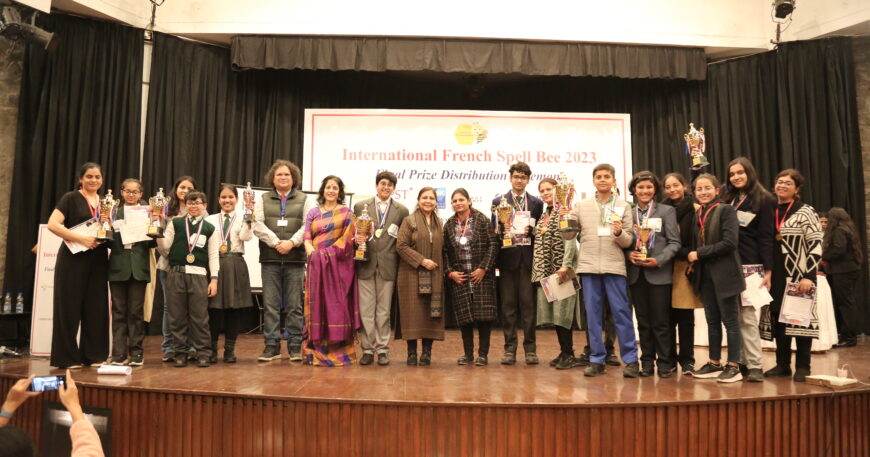
Last Chance to Register for the French Spell Bee 2024-2025 – Don’t Miss Out!

The clock is ticking, and this is your FINAL opportunity to be part of the French Spell Bee 2024-2025! Last date to register for French Spell Bee 2024 is 31st August 2024.If you’re a student learning French, a school wanting to showcase your students’ linguistic talents, or a teacher looking for a way to elevate your students’ language skills, then this is your golden chance! The French Spell Bee isn’t just a competition—it’s an enriching experience that combines learning, competition, and fun while offering some truly amazing rewards. What is the French Spell Bee? The French Spell Bee is an international competition aimed at students studying French in non-Francophone countries. Over the years, this event has grown into a prestigious platform that tests students’ knowledge of French vocabulary, pronunciation, and comprehension across different levels. Students compete in three progressive stages to win incredible prizes and recognition. Competition Levels The competition is divided into three levels to accommodate students at different stages of their learning journey: Each level challenges students in a manner suited to their proficiency, making it a fair yet stimulating experience for all participants. Highlights of the French Spell Bee 2024-2025 Why Participate? Here’s what makes the French Spell Bee a unique and valuable experience: Guidebooks and Preparation Resources To make sure every participant is fully prepared, the French Spell Bee provides comprehensive guidebooks, which are: Mock Tests: Practice Before the Real Challenge Participants can take multiple mock tests available on the official website to get a feel of the actual competition. These mock tests: Registration Details and Steps Ready to join? Here’s how you can register: Prizes and Awards The French Spell Bee offers unbeatable rewards that make all the hard work worthwhile: Time is Running Out—Register Now! With the registration deadline fast approaching, that is on 31st August 2024, this is your last chance to be part of the French Spell Bee 2024-2025. Don’t miss out on a competition that not only improves your French but also offers fantastic rewards and unforgettable experiences. Register today and set yourself on the path to becoming a French language champion! For more details or assistance, feel free to contact our helpline at 9811237050/80 or email us at frenchspellbee@lefrehindi.com.
Read More

Embracing Francophone Culture: A vibrant celebration at our partner school!

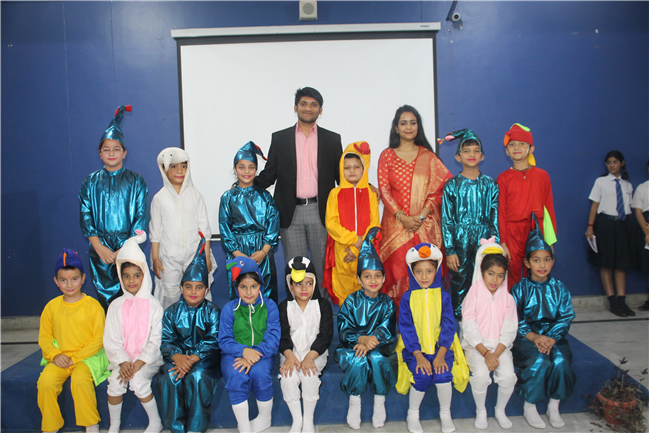
At Inspiration Public School in Haldwani, nestled in the serene beauty of Nainital, a spirited celebration unfolded on April 24th, 2024. The occasion? A vibrant Francophone Festival, meticulously organized for students from grades 4 to 8. As the echoes of laughter and cultural exchange reverberated through the halls, it became evident that this event was not just a mere festivity; it was a testament to Le Frehindi and the school’s commitment to promoting linguistic diversity and cultural appreciation.The festivities commenced with a ceremonial Lamp Lighting ceremony, graced by the esteemed presence of Mr. Kapil Akoliya, along with the school’s revered Principal, Mr. Anurag Mathur, and Vice Principal, Mrs. Mamta Taneja. This symbolic gesture marked the beginning of an enchanting journey into the world of French art and expression. Kicking off the performances, the young talents of class 4 mesmerized the audience with their graceful rendition of the classic French song “Allouette,” setting the stage for a series of captivating acts. From tongue twisters to poetry recitations, and from debates to painting sessions, every segment of the festival pulsated with creativity and enthusiasm.The Francophone Festival is not just a recent addition to our partner school’s calendar; but it has a legacy dating back to 1880. Over the years, it has evolved into a platform aimed at nurturing a fondness for the French language among the students. French, a language spoken across continents, embodies a rich heritage and serves as a bridge connecting diverse cultures.What truly made the event special was the spirited participation of the students. Their eagerness to embrace a new language and delve into its nuances was evident in every performance and every brushstroke. Anchoring the show with finesse were Raiti, Vaishnavi, Ritika, Rahul, and Rudra from class 8, whose seamless coordination added a touch of professionalism to the proceedings.Credit is also due to Ms. Mahima Nanda, our dedicated French teacher, whose unwavering commitment and guidance paved the way for the event’s success. Her passion for the language ignited a spark in the students, inspiring them to explore and embrace the beauty of French culture.As the curtains drew to a close on the Francophone Festival, the echoes of laughter and applause lingered in the air, a testament to the joyous camaraderie shared by all present. It was not merely an event but a celebration of unity in diversity, a celebration of the universal language of love and understanding.In conclusion, the Francophone Festival at Inspiration Public School was not just a day of festivities but a stepping stone towards fostering cultural inclusivity and linguistic harmony. As we bid adieu to this memorable day, we carry with us the spirit of Francophonie, enriching our lives with every “Bonjour” and “Merci” exchanged, and paving the way for a brighter, more interconnected future. Vive la Francophonie! For further details, kindly visit our website at www.lefrehindi.com.You can also reach out to us directly through our contact page: https://lefrehindi.com/contact/ To connect with us via WhatsApp or phone, please use the following numbers: +91 98112 37050 / 45 / 67. For email correspondence, you can reach our team at yes@lefrehindi.com
Read More
Cart

Our Summer Programs 2025 are FULLY BOOKED! 🚀 Secure your spot now for our Winter Programs 2025 (Oct, Nov, Dec) before it's too late! ❄️✨ Act fast and register now! Click here

X