
Paris: (+33) 627924398
New Delhi: (+91) 98112 37050
info@lefrehindi.com

🌍 From the Alps to the Himalayas: Building Bridges of Culture, Youth, and Sustainability

In today’s interconnected world, where borders are shrinking but cultural identities remain vital, Le Frehindi is committed to creating living bridges that connect communities across continents. One such visionary effort is the Alps ↔ Himalayas Initiative (ALHI) — a flagship project we aim to develop over the next three to five years. This unique program will link two of the world’s most iconic mountain ranges, the Alps in Europe and the Himalayas in South Asia, through cultural exchange, youth empowerment, and sustainable development. 🌱 Why the Alps ↔ Himalayas Initiative (ALHI) Matters The Alps and the Himalayas are not just breathtaking landscapes. They are living ecosystems, cultural heartlands, and home to millions of young people whose futures rely on sustainability and international cooperation. Through ALHI, we will connect these two regions by fostering: By uniting shared challenges and opportunities, ALHI will serve as a bridge between Europe and South Asia for culture, education, and green growth. 🚀 A Game-Changer for Local Youth At its core, ALHI is about empowering young people. Beyond cultural exchange, the project is designed to create tangible social and economic benefits for local communities: This is how ALHI goes beyond tourism — it is about creating future-ready youth leaders who think globally but act locally. 🤝 Partnerships & Collaboration The Alps ↔ Himalayas Initiative will grow with strong partnerships at every level. With the patronage of the Embassy of India in France, the project has diplomatic credibility and international recognition. However, the true impact lies in grassroots collaboration. We are actively seeking partnerships with: By working together, we can create sustainable models of cultural and educational collaboration that will benefit generations to come. 🛤️ The Road Ahead ALHI is not a short-term initiative but a long-term vision. Over the next three to five years, it will evolve into one of Le Frehindi’s most defining flagship projects — a program that links mountains, cultures, and futures. 📩 How to Get Involved:If you are based in the Alps or the Himalayas and would like to collaborate, we invite you to join this movement. Please reach out to us at ceo@lefrehindi.com. Being based in Lyon, France, our team is happy to meet collaborators at a mutually convenient time. ✨ From the Alps to the Himalayas: A Bridge for the Future The Alps ↔ Himalayas Initiative is more than a project. It is a movement where mountains connect people, cultures, and opportunities. By working together, we can create a sustainable future for both regions and inspire the world with a model of cultural exchange and youth-led development. Join us in building this bridge of culture, youth, and sustainability. — Team Frehindi
Read More

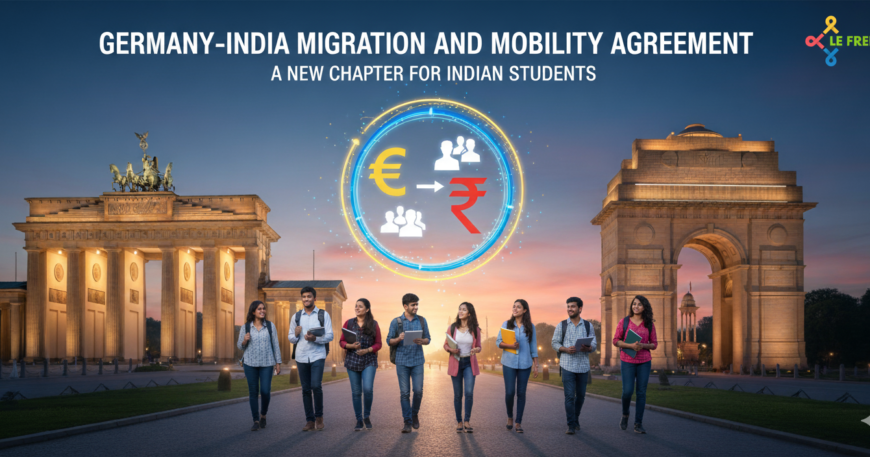
Germany–India Migration and Mobility Agreement: A New Chapter for Indian Students

In December 2022, India and Germany signed the Comprehensive Migration and Mobility Partnership Agreement (MMPA)—a landmark step aimed at creating smoother pathways for Indian students, researchers, skilled professionals, and trainees to study, work, and live in Germany. The agreement officially came into effect in March 2023 and introduced several key measures: Beyond these formal provisions, the MMPA also encourages the structured movement of apprentices, volunteers, interns, language learners, and young professionals. It further strengthens ethical recruitment and vocational training in high-demand sectors such as healthcare, hospitality, and engineering. How Frehindi Is Responding At Le Frehindi, we see this agreement not merely as a policy milestone but as an opening for real, tangible opportunities for Indian youth. While our expertise has long been in connecting India and France through language learning and cultural exchange programs, the MMPA now enables us to expand our scope across Europe—especially into Germany. Here’s how we’re positioning ourselves: German Language Training at Indian Universities Through our International Lounges, we will help students achieve B1 proficiency in German right on their university campuses in India. This model—already highly successful with French—will now prepare students for both academic study in Germany and vocational pathways. Hybrid Language Packages For students seeking European career opportunities, Frehindi is curating hybrid programs that combine French as a cultural bridge with German as a functional access tool. This dual-language strategy prepares students for mobility across multiple European countries. Visa-Ready Preparation By collaborating with institutions like the Academic Evaluation Centre, we aim to serve as a language bridge and mentor for visa-ready candidates. Our focus will be on practical German, aligned with the professional fields Germany is actively recruiting in—such as STEM, healthcare, and skilled trades. Future Projects in Mobility Frehindi is also exploring partnerships for apprenticeships, internships, and volunteering exchanges in Germany, complementing our strong Indo-French exchange ecosystem and extending opportunities across Europe. Why This Matters Germany is rapidly becoming one of the top destinations for Indian students. With world-class universities, career-focused vocational training, and a welcoming immigration framework, the country offers unmatched opportunities. However, while the MMPA reduces bureaucratic hurdles, it also raises the bar on language skills and cultural adaptability. At Le Frehindi, our expertise in building bridges between European and Indian youth now extends to Germany—helping students not just to arrive, but to study in Germany, find jobs, and truly thrive. 📩 Want to know more?For details on upcoming programs, or to explore how your university can host an International Lounge, write to us at team@lefrehindi.com.
Read More

Exploring Oulu: Building Indo-Finnish Bridges in Education and Culture

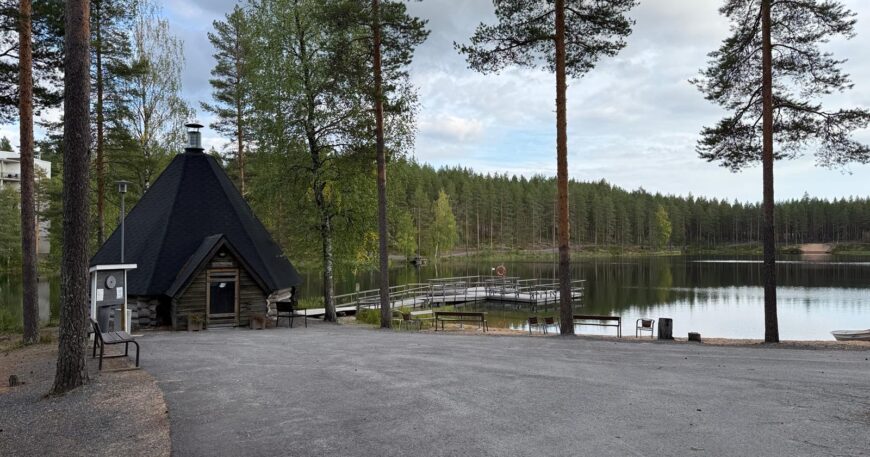
The City of Oulu—known as the “northern capital of Finland”—recently extended a special invitation to Mr. Harbinder “Haru” Mehra, CEO of Le Frehindi, Paris. The visit aimed to give him first-hand insights into the region’s educational and cultural strengths, while exploring future collaborations between Finland and India. Over three days, Mr. Mehra experienced a blend of school and university visits, nature-based activities, and cultural exchanges. What unfolded was more than a study tour—it was the foundation of meaningful partnerships that could connect students, teachers, and institutions across continents. Day 1: Arrival and Rokua UNESCO Global Geopark On arrival at Oulu Airport, Mr. Mehra was warmly welcomed by Ms. Johanna Salmela from the City of Oulu, who hosted him throughout the visit. The first stop was Rokua UNESCO Global Geopark, a region of stunning natural beauty and environmental importance. Discussions here centered on linking Rokua with protected regions in India, particularly in the Himalayas. Mr. Mehra highlighted how such partnerships could enrich cross-cultural learning, especially for young people exposed to global sustainability practices. The day also included visits to Rokua Health & Spa and the Wilderness Hotel Rokuanhovi, run by an ex-Olympic ski champion. The lakeside setting and the inspiring story of its owner left a lasting impression, showing the potential of such locations for hosting student and teacher groups. After a light dinner at Nature Dream Days, the evening concluded with check-in at GreenStar Hotel in Oulu—a sustainable property that seamlessly integrates environmental responsibility into Finnish hospitality. Day 2: Resorts, Nature Walks, and Bird Sanctuaries The second day began at Taiga Resort, a riverside family home converted into a boutique-style retreat. Its warm hospitality struck Mr. Mehra as ideal for Indian students traveling abroad for the first time, offering both safety and comfort. From there, the group moved to Loppula for a guided nature walk with Ms. Rita, who introduced Finland’s unique “Everyman’s Right”—the freedom to roam and enjoy nature regardless of land ownership. Around a campfire, sausages were grilled in the traditional Finnish way, a simple yet profound cultural experience. In the afternoon, attention turned to Liminka Bay, one of Northern Europe’s most celebrated birdwatching destinations. Its vast wetlands and migratory birdlife offered an immersive ecological lesson. Here, Mr. Mehra met the principal of a Liminka school who, despite it being a Saturday, joined the meeting and expressed strong interest in welcoming Indian students. The day ended at Nallikari by the Sea, where Mr. Mehra tried kayaking for the very first time. The calm waters made the experience both safe and enjoyable, reinforcing its suitability for Indian student groups. That evening, over an Indian dinner with Mr. Mikko Kiuttu from Rokua Geopark, discussions on long-term Indo-Finnish partnerships deepened, highlighting the shared benefits of cultural and educational exchanges. Day 3: Education at the Core The final morning focused on education, with meetings at Radisson Blu Hotel, Oulu, involving representatives from: These conversations opened new avenues for collaboration—ranging from teacher training and vocational exchanges to research-based partnerships. Each meeting reinforced the openness of Finnish institutions to host Indian students and teachers. Key Takeaways UNESCO Geopark Partnerships – Strong potential to link Rokua Geopark with Indian geoparks and Himalayan conservation zones for joint projects and student exchanges. Student-Centric Hospitality – Resorts like Taiga and Rokuanhovi offer safe, nurturing environments, crucial for first-time international travelers. Immersive Outdoor Education – Activities such as kayaking, birdwatching, and nature walks provide hands-on ecological learning, perfectly suited for experiential education. Institutional Willingness – Schools, universities, and vocational colleges in Oulu showed clear intent to host Indian students and teachers. Shared Cultural Touchpoints – The blend of Indian and Finnish hospitality, reinforced through meals and conversations with educators and municipal leaders, created genuine human connections. A Step Toward Indo-Finnish Educational Bridges The educational visit to Oulu was not just an inspection tour—it was an exercise in building bridges. As Mr. Mehra reflected: “The warmth of the people, the openness of the institutions, and the immersive natural experiences make Oulu a perfect destination for Indo-European collaboration in education.” With its foundations in sustainability, trust, and high-quality education, Oulu is poised to become a strategic partner in Le Frehindi’s mission of creating meaningful global exposure for youth. The discussions during these three days will now be translated into concrete programs—teacher training, student exchanges, and joint cultural projects—that promise to strengthen ties between Finland and India. As Mr. Mehra departed for Paris, it was clear that Oulu had not only sown the seeds but also nurtured the soil for a flourishing Indo-Finnish partnership.
Read More

India: A Diamond Society with Cultural-Spiritual Wealth

Introduction The word “poverty” carries heavy baggage in modern global discourse. To Western economists, being poor often means exclusion from consumption, lack of access to branded goods, or inability to live up to a material standard of life. Yet, when the same lens is applied to India, it often produces distortions. India, despite its economic challenges, cannot be simplistically painted as a “banana republic” of stark wealth inequality. Instead, it increasingly resembles what I call a “diamond society”—a nation where there is a growing, thick middle class, a visible wealthy elite at the top, and at the base, millions who may live simply, but not necessarily in misery. What makes this unique is that India’s “wealth” is not only material but also cultural and spiritual. To miss this is to misunderstand the very essence of Indian society. Poverty in the Western Lens In most Western countries, to be “poor” is to be cut off from the mainstream of life. It often translates into: A poor American or European often feels excluded from society’s rhythm—unable to host events, participate in festivals, or celebrate life milestones with dignity. The Western idea of wealth is linear and materialist: you are rich if you consume more, poor if you consume less. The Indian Diamond: Layers of Society In India, the social structure is far more layered and nuanced. If we imagine it visually: What makes India unique is that the base is not hollow. Villages and towns are filled with people who live simply but do not see themselves as destitute, because their lives are interwoven with festivals, spirituality, joint families, and a philosophy of contentment. Example: The Wedding Celebration Perhaps no event captures this better than the Indian wedding. Yet in both cases, the fervor is the same. The music is loud, the lights are bright, the rituals are intact, and the bride’s send-off is equally emotional. Here lies the beauty: happiness is not proportional to expenditure. A villager may spend ₹1 lakh, a businessman ₹1 crore, but the joy in the rituals and community is equally intense. This is not poverty—it is living within one’s means while maximizing joy. Contentment as Wealth The idea that you can be happy within your means is deeply embedded in Indian philosophy. Thus, a family that shares meals together, celebrates festivals, and fulfills duties toward community and guests is considered prosperous—even if their bank balance is modest. Cultural-Spiritual Wealth vs. Material Wealth Consider two households: The difference is profound: in India, even “poor” families are culturally and spiritually rich, often far more socially connected than low-income families in the West. Festivals as Equalizers Take Diwali or Durga Puja. But the essence—sharing sweets, lighting lamps, telling stories of Ramayana or Durga’s victory—is the same. The spiritual joy levels the ground. Similarly, Eid in a village may involve homemade biryani shared with neighbors, while in a city it may be celebrated with lavish feasts. Yet both carry the same heart of togetherness. The Hindu Way of Life: Evolution, Not Rigidity Another reason India cannot be reduced to “poor vs. rich” binaries is the flexibility of its civilizational philosophy. Unlike Abrahamic religions that often emphasize strict scripture, the Hindu way of life is: This flexibility means that Indians can live happily at different material levels without feeling “lesser.” The farmer and the CEO may celebrate the same Diwali with different scales but similar devotion. Why Western Lens Misreads India Western observers often miss this because their benchmarks are different: By these measures, India looks poor and unequal. But if you measure cultural participation, spiritual resilience, and community bonding, India looks far richer. It’s why a villager with two cows, a field, and a family around the chulha (hearth) may feel happier than a Western worker in a lonely apartment. India’s Diamond Society in Action Together, this forms a diamond: not a pyramid of misery, but a society where even the bottom has richness of life beyond GDP numbers. The Philosophy of “Happiness Within Means” At the core of this lies an Indian ethos: santosha—contentment. This is the genius of Indian civilization: to democratize joy through culture and spirituality, not just money. Lessons for the World As global inequality rises, India’s example has lessons: Conclusion India is not a banana republic. It is a diamond society, with a broadening middle class, a visible elite, and a base that may look “poor” in Western eyes but is sustained by a treasury of culture, spirituality, and community. The West often defines poverty as the inability to consume. India redefines it: to live within one’s means, to celebrate with dignity, and to find joy in culture, family, and faith. This is why, in India, even the humblest family lights its diyas, plays its bands, serves its food, and sends off its daughter with as much pride as the richest man in the city. This is not poverty. This is civilizational wealth. And this—perhaps—is India’s greatest export to the world. An Invitation to Experience At Le Frehindi, we believe that this essence of India—simple living, high thinking, and cultural-spiritual wealth—is best understood not through textbooks but through experience. This is why we actively promote experiential trips for Western students to visit India and see how joy, dignity, and freedom can thrive within modest means. To live in a village, celebrate local festivals, eat at family tables, and participate in weddings or community rituals is to understand a truth that India has carried for centuries: happiness is not about how much you spend, but how much love and meaning you create. If you are a school, a parent, or a Westerner who would like to take part in such programs, do write to me at: ceo@lefrehindi.com Come, discover India’s diamond society—where you can be happy, free, and guiltless in living simply within your means. Haru Mehra  President, Le Frehindi
Read More

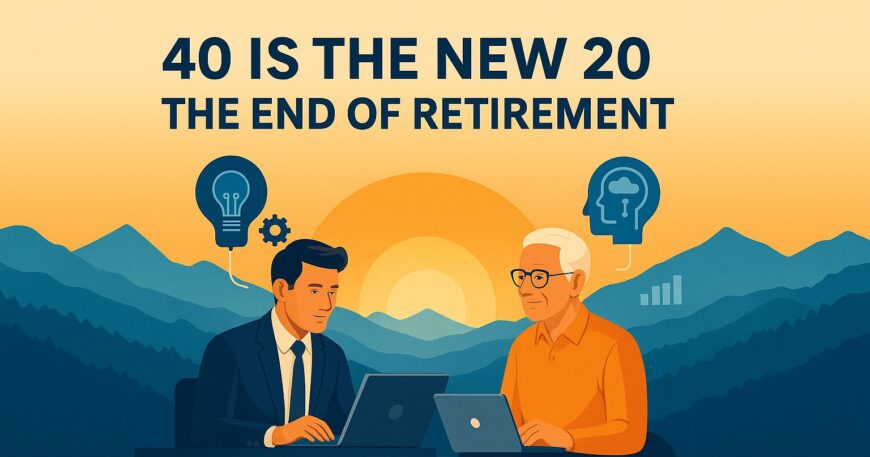
Why 40 is the New 20: How Technology, AI, and Healthy Living Are Redefining Work and Age

We’re living in a time where the concept of age as a limiting factor in career, creativity, and leadership is fast disappearing. The 40-year-olds of today are not only healthier and more energetic than their parents were at the same age but, in many ways, they are just getting started. Technology, AI-driven healthcare, and a profound shift in how we work are making it possible for people to live, create, and lead well into what was once considered “retirement age.” AI, Healthcare, and the End of Retirement as We Know It Medical advances have always extended life, but now we’re witnessing something deeper: AI-driven healthcare, personalized supplements, and constant self-monitoring tools like smartwatches and genetic tests are helping people not only live longer but live stronger. A 40-year-old today has access to data about their body that was unimaginable even a decade ago: real-time heart metrics, sleep tracking, gut microbiome analysis, personalized exercise and nutrition plans. This makes preventive health care the default, not the exception. The result? People can remain mentally sharp and physically capable well into their 70s and 80s. Look around: Donald Trump, Narendra Modi, Warren Buffett—whether you agree with their politics or not—are still leading at a high level, proving that age no longer defines capability. Work from Anywhere, Earn from Anywhere Another major shift is how work itself has evolved. With remote work, cloud collaboration, and AI-enhanced productivity tools, many professionals can work in clean, healthy environments far from polluted urban centers. You can run a global business from a cabin in the Himalayas, a chalet in the Alps, or a beach house in California. Income is no longer tied to being in a physical office from 9 to 5; value is in output, not location. Experience + AI = The New Entrepreneurial Wave Perhaps the most exciting change is the role of experienced professionals in driving future innovation. The next wave of startups will likely come from people in their 60s and beyond—those with decades of industry knowledge, now supercharged with AI tools that handle research, data, and operations. They won’t need massive teams; they’ll need small, agile squads of younger professionals in their 30s and 40s to execute their vision. My Personal Example – Leading More at 50 than at 30 Take my own journey as CEO of Le Frehindi, a small but ambitious Indo-French startup. In my 30s, I worked harder but achieved less—running around for meetings, managing everything manually, exhausted by inefficiencies. Now, in my early 50s, I do more with less effort: The result? I can achieve in a week what used to take me a month. And I can envision building global platforms like EUHOP.com and PepPoetry.com without being chained to an office or a city. The Future: No Retirement, Just Reinvention As the world’s population ages, this trend will only grow. Retirement will become an outdated concept. Instead, people will reinvent themselves multiple times across their lives. Your 60s could be your most creative decade. Your 70s might be when you launch your most impactful startup. The “golden years” will no longer mean slowing down—they’ll mean shining brighter, powered by health, tech, and purpose. The message is clear: Age is no longer a barrier; it’s an advantage. With experience, tools, and a global stage, the best years of work and contribution might just begin when we once thought they should end. If this vision excites you, I’m looking to mentor passionate individuals in their mid-20s or early 30s through a remote, paid internship. Together, we’ll build AI-enabled innovations shaping the future of work and learning. If you know someone eager to grow and create with us, refer them to me at ceo@lefrehindi.com. Haru MehraPresident & CEOLe Frehindi – Paris 
Read More

Why November–December 2025 is the Perfect Season for France & Spain Exchanges/Internships

If you want students to truly experience Europe—not just tick off tourist spots—then November and December are the months to choose. The season is festive, welcoming, and perfectly paced for meaningful school and university exchanges, campus visits, and short internships. Festive immersion, not tourist crowds Europe in winter shines differently. Streets come alive with twinkling lights, choirs, and elaborate window displays—yet without the overwhelming summer rush. This means fewer queues, more time to explore, and genuine interactions with locals. In France, Lyon’s Festival of Lights transforms the city into an open-air art gallery, while Strasbourg’s world-famous Christmas markets—along with nearby Colmar—turn cobbled streets into fairytale lanes filled with crafts, carols, and cozy chalets. In Spain, Madrid’s Plaza Mayor and Barcelona’s Santa Llúcia markets brim with nativity scenes, handmade gifts, and hot chocolate. Meanwhile, Málaga and Seville dazzle with some of the most spectacular street illuminations in Europe. Yes, the weather is chilly, but with the right layers it’s ideal for walking tours, interactive cultural tasks, and creating memories that go far beyond classroom walls. Seasonal tastes, cultural connections Food in November–December becomes a bridge for friendships and cultural learning. Students share laughter over vin chaud (hot wine), raclette, and fondue in France, or enjoy churros con chocolate, turrón, and festive tapas in Spain. Markets, food courts, and seasonal fairs turn into living classrooms—where lessons in language, hospitality, business, and design are woven seamlessly into real-world experiences. Academic alignment This season fits beautifully with academic calendars. Late term means professors are still on campus, ready to host briefings, lab visits, or peer-to-peer exchanges before the winter break. At the same time, many companies are wrapping up projects and are open to short job-shadowing opportunities or micro-internships. For Indian students, this provides the perfect first exposure to European workplace culture—structured yet welcoming. Budget-friendly, better access Another advantage? November–December offers more group availability in hostels and hotels compared to peak summer months. International offices have more breathing space for meetings, campus tours, and signing MoUs, ensuring that planning for future cohorts happens without the summer rush. What outcomes can you expect? Plan Your Visit with Le Frehindi At Le Frehindi, we help you align campuses, internships, and cultural immersion routes so that students return not just inspired, but enriched—with new skills, international exposure, and meaningful connections. 📧 Write to: team@lefrehindi.com📱 Call/WhatsApp: +91 9811237050 / 45 ✨ Let’s secure your November–December 2025 exchange dates—while the lights of Europe are still shining bright. Team Frehindi
Read More

🇮🇳 What India Must Do Now: A Roadmap to Becoming a Serious Global Economic Player

India stands at the precipice of transformation. With the global economy increasingly fragmented and strategic autonomy becoming the buzzword of the 21st century, the time has come for India to push forward with confidence, clarity, and conviction. We are blessed with a powerful demographic dividend — a young, ambitious population — and now is the moment to leverage it fully. But what must India do now to step into its rightful place on the global economic stage?  1. Structural Reforms that Unlock Growth India must act decisively to replace outdated regulatory bottlenecks with trust-based governance. Comprehensive reforms in:• GST, compliance, and legal frameworks• Streamlined business incorporation systems• Overhaul of labour laws and startup-friendly regulations will not only reduce friction but also give entrepreneurs and investors the confidence to grow.  2. Embrace Industry 5.0 & Leverage DPI We’ve seen immense success with Digital Public Infrastructure (DPI). Now, it’s time to step into Industry 5.0 — where technology, creativity, and sustainability converge.• Use AI, data, and automation to unlock productivity• Simplify taxation, unlock non-tax revenues, and improve ease of compliance• Incentivize R&D, innovation, and next-gen infrastructure  3. Attract Global Capital & Talent To truly lead, India must become a magnet for the world’s best minds and money. That means:• Transparent, consistent policy frameworks• Simplified FDI norms and intellectual property protection• Stronger contracts and legal clarity for global investors India must position itself as the go-to destination for long-term, ethical, and impact-driven investment.  4. Reboot Tourism & Promote Indian Culture Tourism is a sleeping giant in India. We need:• Better infrastructure & seamless digital experiences• Stronger cultural branding for Indian destinations• Visa reforms and inter-state coordination• Skill-building for hospitality and cultural ambassadors A global India must invite the world in, while also helping Indians explore their own land more meaningfully.  5. Empower Cities & Local Governance Urban India must become the engine of economic dynamism:• Implement municipal reforms and financing models• Upgrade city logistics, public transport, and green spaces• Enable smart governance through data and AI  6. Massive Push on Skill Development & School-Level Training The New Education Policy (NEP) provides an opportunity India cannot afford to miss. We must:• Train teachers in emerging tools, technology, and experiential pedagogies• Integrate skill-based modules at the school level — from digital fluency to communication, design thinking, and entrepreneurship• Build stronger partnerships between industry and education, so students understand real-world relevance from a young age  So, What’s the Big Idea? India’s demographic dividend can either be our greatest gift — or our greatest risk — depending on how we act now. The urgency is real. If we wish to lead, we must unshackle ourselves from incrementalism and embrace bold, coordinated action.  How Le Frehindi Is Playing Its Part At Le Frehindi, we’re on a mission to give Indian youth the right exposure and global-local immersion they need to thrive in a rapidly changing world. Our projects span:• International exchange programs with Europe• Language & cultural immersion for school and university students• On-site and online contests, internships, and leadership journeys• Partnerships with Indian institutions to implement the spirit of NEP Whether it’s sending students to France for immersive year-long language and industry experiences, or bringing passionate French educators to remote Indian villages — we’re building bridges between aspiration and opportunity. Explore our vision. Join the movement. Be the change. 🔗 Visit us: www.lefrehindi.com🔗 Connect with me on LinkedIn: Haru Mehra📧 Email: haru@frehindi.com | team@lefrehindi.com📞 Call/WhatsApp: +91 98112 37050 | +91 95570 50195 Let’s shape a future where every young Indian has the tools, mindset, and platform to lead — locally and globally. 
Read More

A Lesson from the East: Why Jerusalem and the World Must Look to India for Peaceful Coexistence

🔥 A Thousand Years, Still No Peace In 1096, the First Crusade began — a religious war that placed Jerusalem at its epicenter. Over a thousand years later, the region remains engulfed in conflict. Violence. Division. Deep-rooted distrust. Peace feels more like a distant illusion than a near reality. But this isn’t just about history repeating itself.This is about humanity failing to grow — where it matters the most:Empathy. Coexistence. Compassion. 🌐 A Technologically Advanced World — With a Spirit Still Divided Despite global advancements in technology, connectivity, and knowledge, the human heart still falters when confronted with difference — different faiths, cultures, languages, ideologies, and truths. And nowhere is this struggle more visible than in regions like Jerusalem and Gaza — lands rich in spirituality, yet fractured in unity. 🇮🇳 India: A Living Example of Unity in Diversity If the world is seeking a model for peaceful coexistence, it need not look far.India — with over 1.4 billion people, 22+ official languages, dozens of faiths, and a kaleidoscope of customs — stands as a real-time experiment in harmony amidst complexity. India doesn’t just preach coexistence.It lives it. Even amidst social, political, and economic challenges, India continues to prove:Peaceful coexistence is not a utopian dream — it’s a living, breathing possibility. 💡 Why the World Needs India’s Message — Now More Than Ever Today, we face more than just a crisis of conflict.We face a deeper, more dangerous threat — a crisis of understanding. India teaches us — and Le Frehindi firmly believes — that peace does not emerge from treaties or weapons.It grows through relationships, conversations, and the courage to truly listen, especially when it’s difficult. 👩‍🎓 Youth as Ambassadors of Peace: Le Frehindi’s Vision This belief fuels Le Frehindi’s mission: to promote international youth exchanges that foster understanding and transformational learning. Because when a young person from Jerusalem walks the streets of Delhi…When a French learner of Hindi listens to Urdu poetry…They begin to see the “other” not as a stranger —but as a reflection of themselves. 🕊️ Toward a New Kind of Diplomacy — Led by Youth, Not War At Le Frehindi, we envision a world where students, not soldiers, shape international dialogue. Our programs offer: These aren’t just educational programs — they are pathways to peace.They teach the next generation how to live with difference, not fear it. This isn’t idealism.It’s the only sustainable way forward. 🤝 Let’s Co-Create a Peaceful Future We call upon every school, university, youth organization, and institution across the world — especially in regions facing unrest and conflict — to partner with us. Let’s create immersive programs that allow young minds to walk in each other’s shoes, experience the soul of India, and understand the true essence of coexistence — not from textbooks, but from life itself.  Write to us at ceo@lefrehindi.com to explore how we can bring your youth into dialogue with India’s age-old wisdom and modern dynamism. 🌍 Let Peace Be a Practice, Not a Promise In a world divided by borders, beliefs, and bruised histories, India stands as a reminder —that unity in diversity is not a slogan — it’s a survival strategy. Let’s make peace a habit.Let’s make dialogue the first step.Let’s make the next generation the architects of a better, braver, more understanding world. Peace isn’t a promise we wait for. It’s a practice we live every day.
Read More

Celebrating Unity & Success: A Heartfelt Thank You to the Indian Community in France

🇮🇳🤝🇫🇷 Thank You for Making This Event a Grand Success! 🇫🇷🤝🇮🇳 Dear Friends & Fellow Indians, The Grand Inauguration of the New Indian Consulate in Marseille was a momentous occasion, marking a new chapter in Indo-French relations. It all began with the warm welcome of Hon’ble Prime Minister Shri Narendra Modi on the night of 11th February 2025, followed by a prestigious dinner hosted by the Embassy of India at Intercontinental Marseille – Hotel Dieu, where esteemed dignitaries, members of the Indian diaspora, and friends of India in France gathered to celebrate this historic moment. The next morning, on 12th February 2025, the official inauguration ceremony of the consulate took place, solidifying India’s growing ties with France and its commitment to serving the Indian community in southern France. From the depths of my heart, I extend my sincerest gratitude to all my fellow Indians who contributed to making this historic event an overwhelming success. Your passion, commitment, and presence were the driving forces behind its triumph—without you, this achievement would not have been possible. A special note of appreciation to the dedicated members of L’Association Frehindi, who worked selflessly and tirelessly—voluntarily—to ensure everything unfolded seamlessly. Your efforts were not just about organizing an event but about strengthening the spirit of unity and collaboration that binds us as a community. It is moments like these that make us proud of our heritage and reinforce the values we hold dear. I would also like to express my heartfelt thanks to Mr. K.G. Praveen from the Indian Embassy, whose unwavering support and constant guidance played a pivotal role in making this event possible. His encouragement and insights were invaluable in bringing this vision to life. This historic event also gave me the privilege of connecting with so many remarkable individuals—students, research scholars, entrepreneurs, corporate professionals, artists, yoga teachers, and visionaries—each of you contributing in your own unique way to the Indo-French relationship. Whether you are here for higher education, leading a startup, innovating in the corporate world, or promoting Indo-French arts and culture, your aspirations and achievements inspire us all. #WATCH | Haru Mehra President, Association Frehindi and Saachi Ahuja, English Language Assistant express their joy and pride at the inauguration of the new 𝙄𝙣𝙙𝙞𝙖𝙣 𝘾𝙤𝙣𝙨𝙪𝙡𝙖𝙩𝙚 𝙞𝙣 𝙈𝙖𝙧𝙨𝙚𝙞𝙡𝙡𝙚.#PMModiInFrance | #IndiaFrance | @MEAIndia | @PMOIndia |… pic.twitter.com/0SnoqTzdrz — All India Radio News (@airnewsalerts) February 12, 2025 As the President of one of the largest Indian associations in France, I reaffirm my commitment to staying connected with each one of you. This is just the beginning of a larger movement of collaboration, friendship, and shared growth. I have no doubt that when another opportunity arises for us to come together, you will be among the first to step forward—and you will always find me standing beside you. Let’s nurture this bond, support each other, and create something extraordinary together! Stay Connected & Be Part of the Journey! Are you an Indian student, entrepreneur, or professional in France? Do you want to be part of more such exciting events, networking opportunities, and cultural exchanges? Join hands with L’Association Frehindi and be part of a growing Indo-French community working towards a brighter future. 📧 Email us at: team@lefrehindi.com📞 India Contact (Shilpa): +91 9811237050📞 France Contact (Vaishali): +33 6 27 92 43 98 (WhatsApp messages are welcome) We look forward to collaborating and growing together! 🇮🇳❤️🇫🇷 Merci et à bientôt! Haru MehraPresident, L’Association Frehindi
Read More

Why Hard Work is the Key to India’s Growth and Success at Le Frehindi

The debate around work hours ignited by N.R. Narayana Murthy’s call for a 70-hour workweek and L&T’s S.N. Subramanian’s suggestion of 90 hours reflects a crucial divide in India’s mindset. While many dismiss long hours as corporate exploitation, history proves otherwise—nations that have prospered, like Germany, Japan, and South Korea, thrived on unwavering dedication and relentless hard work. After World War II, Japan and Germany were in ruins. Their economies were shattered, and their people had little but their will to rebuild. What did they do? They worked long, tireless hours, not just to survive but to create global economic powerhouses. Their work ethic led to Japanese technological supremacy and Germany’s manufacturing excellence. South Korea followed suit, evolving from a war-torn nation into a global innovation hub through sheer determination and an unwavering commitment to productivity. In India today, a generation born into relative privilege often takes prosperity for granted. Many forget that their forefathers toiled beyond 70, 80, or even 90 hours a week to create the wealth and opportunities they now enjoy. The reality remains—only those who put in extra effort will rise above the rest. Meritocracy is the foundation of growth, and those who contribute more will achieve more. At Le Frehindi, we recognize and reward this work ethic. We actively seek individuals who are willing to go the extra mile—because when you give more, you learn more, and you earn more. Our new initiatives, such as Employee of the Month with cash rewards and bonuses for senior management, reflect our commitment to fostering a culture where hard work is valued, encouraged, and rewarded. If you are someone who believes in dedication, ambition, and continuous growth, we would love to have you on our team. Join us at Le Frehindi and be part of a company that values excellence. 📩 Send your CV to hr@lefrehindi.com and become part of a future built on passion and perseverance!
Read More
Cart

Our Summer Programs 2025 are FULLY BOOKED! 🚀 Secure your spot now for our Winter Programs 2025 (Oct, Nov, Dec) before it's too late! ❄️✨ Act fast and register now! Click here

X